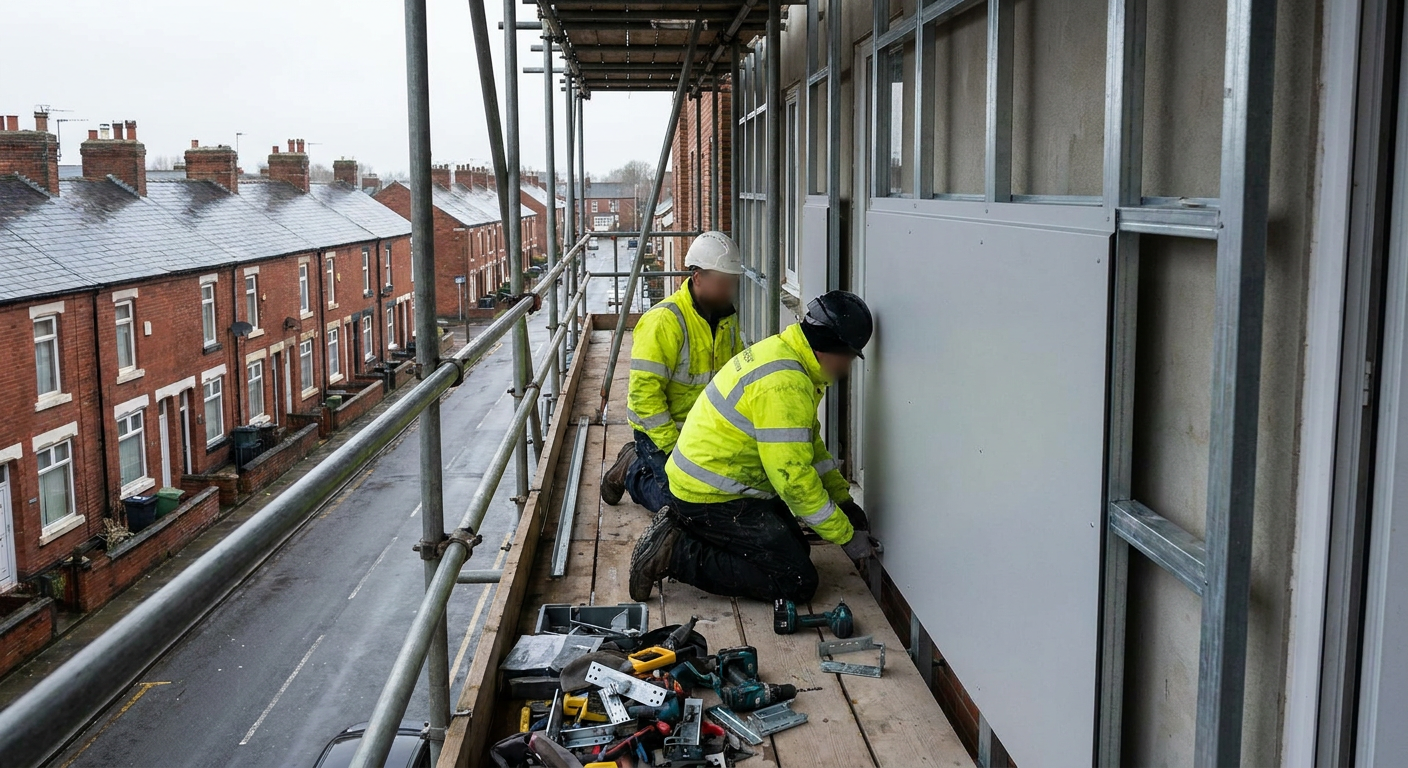
EWS1 services
External wall survey services, from check to EWS1 form
Send an enquiry about your flat and find out which service applies. There is no charge to ask, and no obligation until you decide to go ahead with a specialist firm.
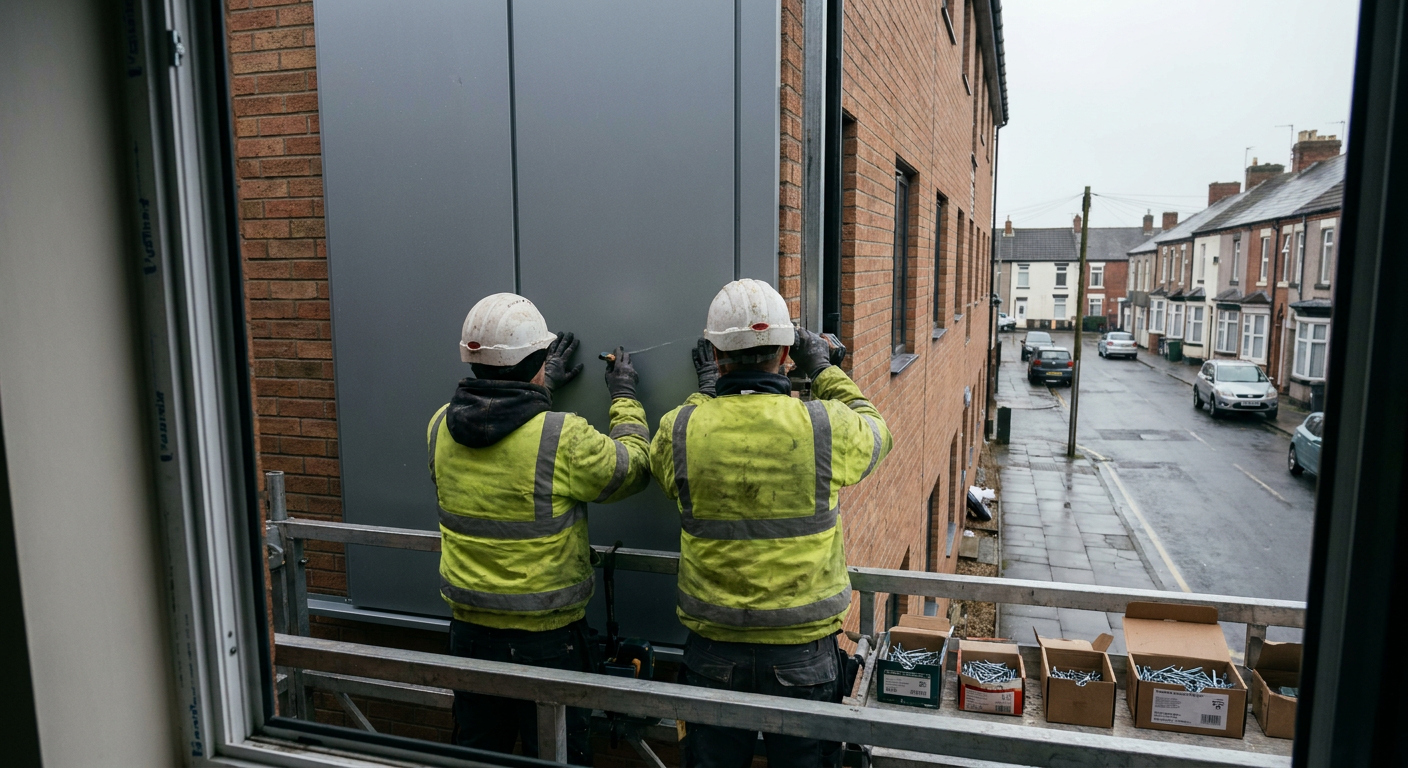
The certificate that lenders look for
When a mortgage lender asks for paperwork on external walls, they mean the EWS1 certificate. This document records how safe the materials on the outside of the block are, and assigns a rating from A1 to B2.
A specialist firm carries out the checks and issues the certificate once the assessment is complete. The form stays valid for five years unless building work changes the exterior in the meantime.
If you are selling or remortgaging a flat, the buyer or lender will usually request this before approving the loan. Read what the [EWS1 certificate](/ews1-certificate) covers and which rating options apply to different types of cladding.
The physical survey of your block
Before any paperwork exists, someone has to look at the building. The EWS1 survey involves a close inspection of cladding panels, balconies, insulation and fire breaks on the outside of the block.
A specialist firm arranges access, examines the materials and takes samples where necessary. They check whether combustible elements are present and how they sit in relation to windows and escape routes.
You cannot skip this stage. Even if the building looks fine from the street, the surveyor needs to see behind the outer layer to confirm what is underneath. Find out what the [EWS1 survey](/ews1-survey) involves when checking cladding and balconies on your home.
Who is allowed to sign the form
Not every building professional can put their name to an EWS1 form. The person signing must be a chartered member of the Royal Institution of Chartered Surveyors (RICS) or the Institution of Fire Engineers (IFE), hold specific qualifications in fire safety and external wall construction, and carry professional indemnity insurance that covers this exact type of work.
Lenders check the credentials of whoever signed the form. A surveyor without RICS or IFE membership means the paperwork gets rejected, because mortgage providers require proof that the assessor meets the standard set out in the RICS guidance note for assessing external walls.
A specialist firm provides a registered surveyor to review the findings and take responsibility for the final rating. See who qualifies as an [EWS1 surveyor](/ews1-surveyor) and why their registration matters for your sale or remortgage.
What goes into the written report
Once the inspection is done, the findings need to be set out clearly. The EWS1 report documents exactly what the surveyor found, including photographs, material types and the reasoning behind the chosen rating.
This report supports the certificate. If a lender queries the outcome, the specialist firm refers back to the evidence recorded here. It shows whether combustible materials were found, how much of the wall they cover, and what mitigation exists.
Leaseholders rarely write this themselves. A specialist firm compiles it after visiting the site and reviewing the construction details. Read what the assessor writes down in the [EWS1 report](/ews1-report) and how it backs up the final decision.
The full assessment from start to finish
An EWS1 assessment covers everything between your first question and the finished form. It includes gathering construction drawings, arranging site access, inspecting the walls, analysing materials and completing the paperwork.
Each step follows a set sequence. Skipping one delays the outcome. For instance, without the original build specifications, the specialist firm might need to open up parts of the wall to identify what is inside.
Leaseholders often arrange this when they are trying to sell, but freeholders and management companies commission assessments too. Understanding the [EWS1 assessment](/ews1-assessment) steps helps you know how long the process takes and what the specialist firm needs from you.
Understanding the rating your home receives
The rating on the form determines what happens next. An A1, A2 or A3 rating means the external walls pose an acceptable level of risk, though each sub-category reflects different amounts of combustible material.
B1 and B2 ratings indicate that combustible materials are present in a way that requires attention. A B2 rating usually stops a mortgage application until remediation plans are in place.
Lenders interpret these differently. Some accept A3 while others insist on A1. Knowing what your rating means prevents surprises during a sale. Compare [A1, A2 and A3 ratings](/ratings/a1-a2-a3-ratings-explained) or read what [B1 and B2 mean](/ratings/b1-and-b2-ratings-explained) for flats with more complex wall systems.
Tell us about your flat
Send the details of your home and the situation you face. Someone will reply with the right next step. You are not committing to any work by asking.
- No fee to enquire
- No obligation to proceed
- Clear next steps
Services
- Certificate
An EWS1 certificate records the external wall rating for a block of flats. Find out what each rating means, how long it lasts and who it suits.
- Survey
An EWS1 survey looks at cladding, insulation and balconies on a block of flats. See what the inspection involves and what the report sets out.
- EWS1 Surveyor
An EWS1 surveyor assesses external wall materials on a block of flats and signs the form. Find out what the role involves and how the assessment works.
- EWS1 Report
An EWS1 report sets out the rating given to a building's external walls, the checks behind it and what lenders look for when a flat is valued.
- EWS1 Assessment
An EWS1 assessment reviews the external wall materials on a block of flats. Learn what paperwork is needed first, what the checks cover and what follows.