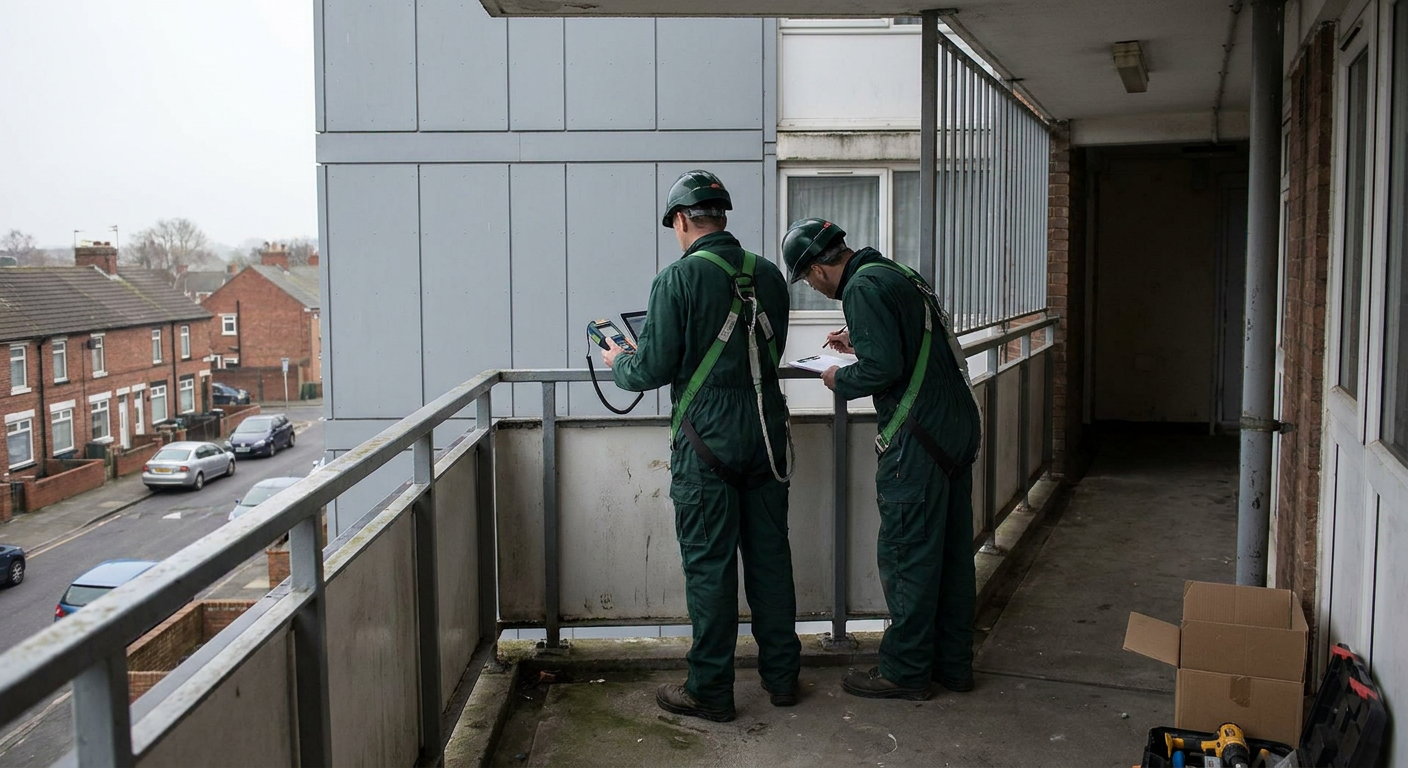
EWS1 process step by step for your building
Send details about your flat and a specialist firm will review what is needed. There is no charge for this first step, so you can find out what to do next before anything is agreed.
What changes the work on an EWS1 survey
Every block of flats is built differently. The materials, the height and the layout all change what the specialist has to examine during the inspection.
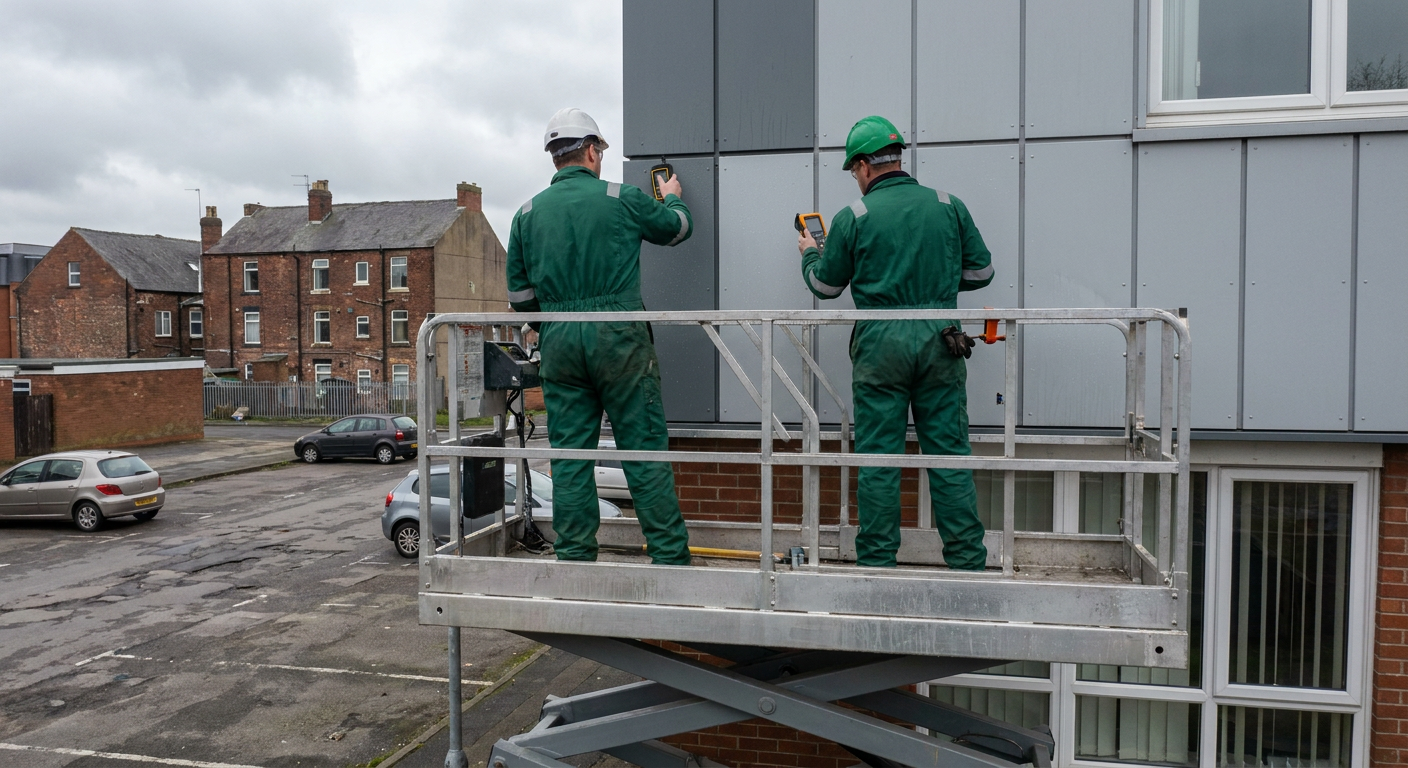
- Height of the building
- Taller blocks need more access equipment so the specialist can reach and inspect every external wall safely.
- Cladding materials used
- Different panels require different tests. The specialist must identify each material before deciding what checks are needed.
- Balcony construction
- Combustible decking or privacy screens add extra surfaces for the specialist to examine during the visit.
- Access around the block
- Tight spaces or shared land mean the specialist needs more time to set up ladders or platforms.
The specialist explains the cost of the particular job before anything is agreed.
What you receive after the inspection
A chartered surveyor or fire engineer examines the external walls, records what they find and makes a judgement based on that evidence. You then receive paperwork that lenders and buyers rely on.
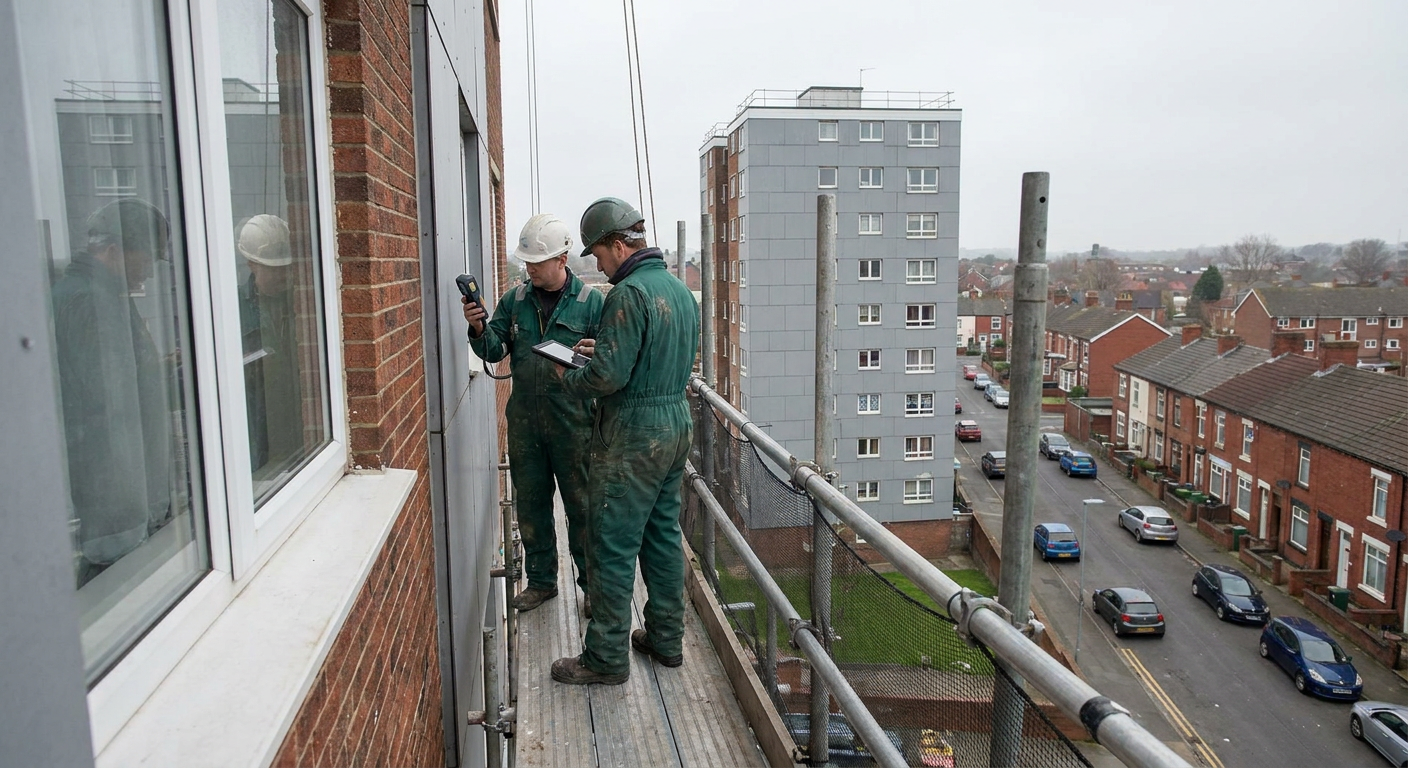
- The signed EWS1 form
- A single document recording the outcome. Mortgage lenders and solicitors ask for this when you sell or remortgage your flat.
- Supporting photographs
- Images taken by the specialist showing the cladding, insulation and balcony materials they examined at your home.
- Written recommendations
- Notes from the specialist on whether any further investigation or remedial work is required on the building.
Visual inspection or intrusive survey
The type of check depends on what the specialist can see from outside and what records the building already holds.
| Visual inspection | Intrusive survey | |
|---|---|---|
| Method | Visual inspectionThe specialist examines the outside of the block using binoculars, drones. | Intrusive surveyThe specialist opens part of the wall to look at layers hidden behind. |
| When it applies | Visual inspectionUsed when existing documents already prove what materials are behind. | Intrusive surveyChosen when drawings are missing or visible clues do not match the paperwork. |
| Disruption | Visual inspectionNo damage to the building. | Intrusive surveyRequires cutting into the wall and making good afterwards. |
| Time on site | Visual inspectionUsually completed in a single visit lasting a few hours. | Intrusive surveyTakes longer because the specialist must open, examine and seal multiple points. |
The specialist advises which approach suits after looking at the building and its records.
Tell us about your flat
Send a few details about your home. A specialist firm reviews them and replies with what happens next. This does not commit you to booking or paying for anything.
- No obligation
- Free to ask
- Plain answers